Briefing

Economic & Social Cost
 admin
14/07/2026
admin
14/07/2026
Infrastructure-layer inaction carries escalating economic and societal costs for telecom carriers, regulators, enterprises and consumers. This briefing examines breach losses, operational disruption, regulatory blind spots, fraud exposure and reputational damage, while presenting a self-financing oversight model. It argues that automated, evidence-grade intelligence could reduce harm, strengthen accountability and fund the transition through improved enforcement across the telecommunications ecosystem over time.
REGULATORY BANDWIDTH CRISIS
admin
15/06/2026
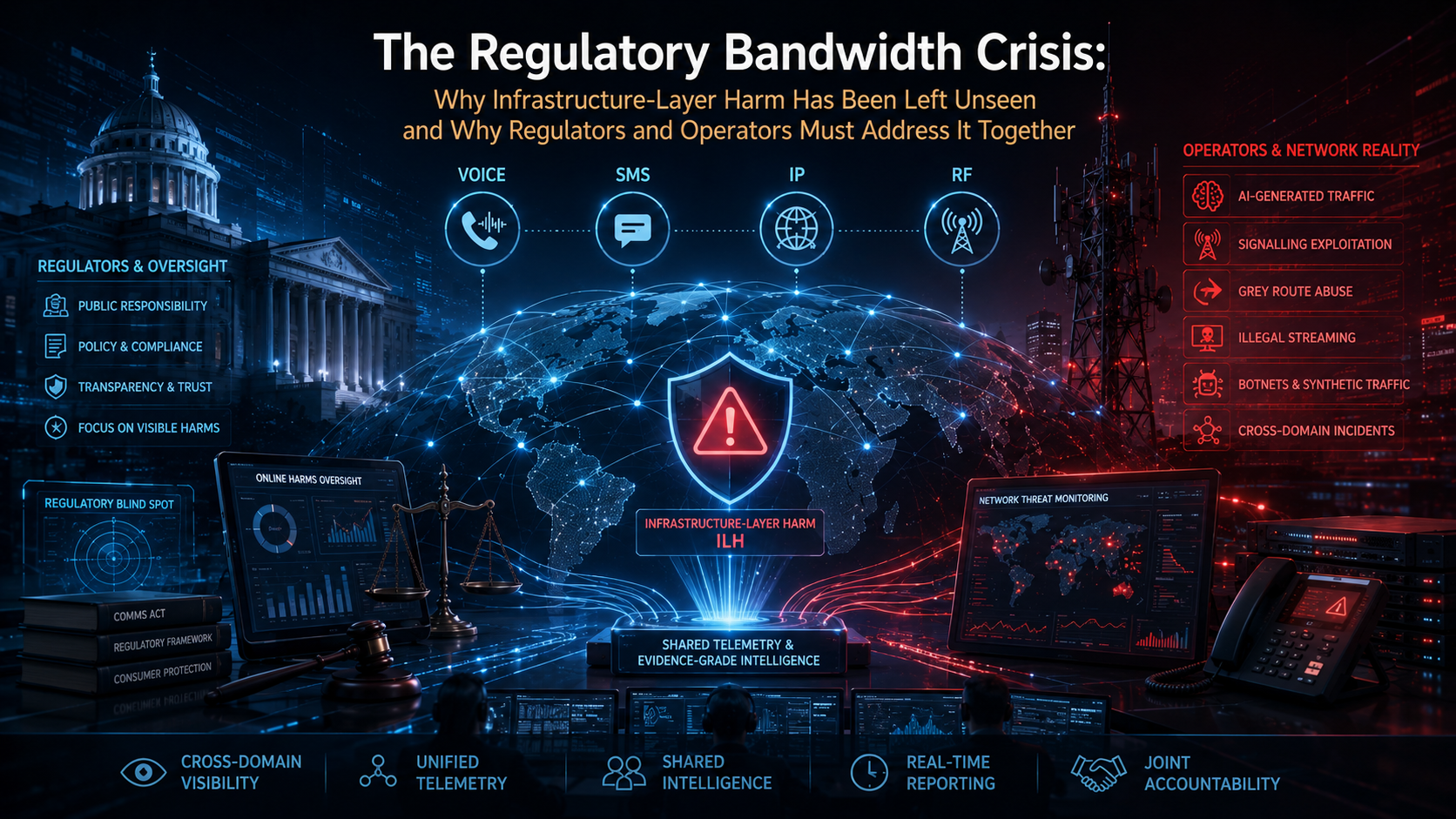
This briefing examines the growing gap between modern telecommunications threats and the regulatory frameworks designed to oversee them. It explores infrastructure-layer harm, cross-domain attack activity, AI-driven telecom abuse, and the limitations of current oversight models, arguing for shared intelligence, standardised telemetry, and closer collaboration between regulators and operators to strengthen national communications resilience and accountability.
Telco Resilience
admin
13/05/2026
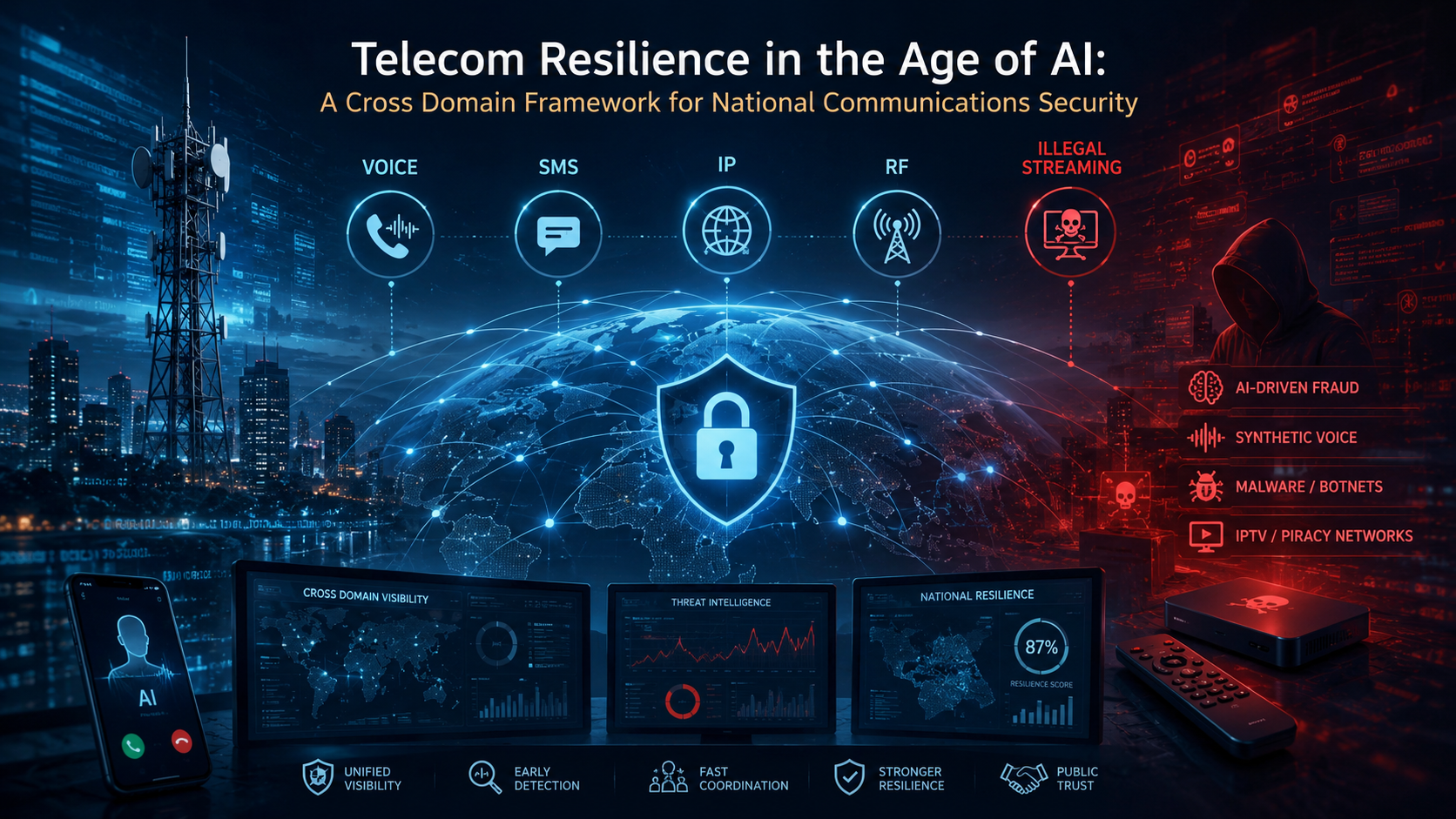
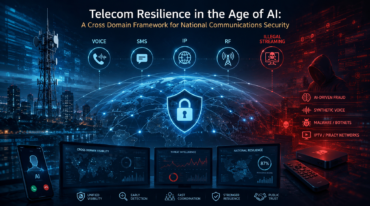
Telecommunications networks are facing a new generation of AI-driven threats spanning Voice, SMS, IP, RF, and illegal streaming infrastructure. This briefing examines the convergence of telecom fraud, compromised IPTV ecosystems, AI-enabled attack automation, and cross-domain resilience failures, highlighting the operational, regulatory, and national security implications for carriers, regulators, DFIR professionals, and critical infrastructure stakeholders operating within increasingly interconnected communications environments.

Enterprise Connected Devices
 Roy Isbell
17/04/2026
Roy Isbell
17/04/2026
Enterprise connected devices now underpin physical security, operational technology and digital infrastructure across UK organisations. This briefing examines how government policy from DSIT aligns with technical guidance from NCSC, NPSA and NACE, highlighting overlaps, tensions and practical implications for DFIR teams responsible for investigation, resilience and evidence preservation across increasingly converged cyber-physical environments within modern enterprise security and incident response.

Using Mobile Device Geodata to Confirm Location
admin
08/03/2026
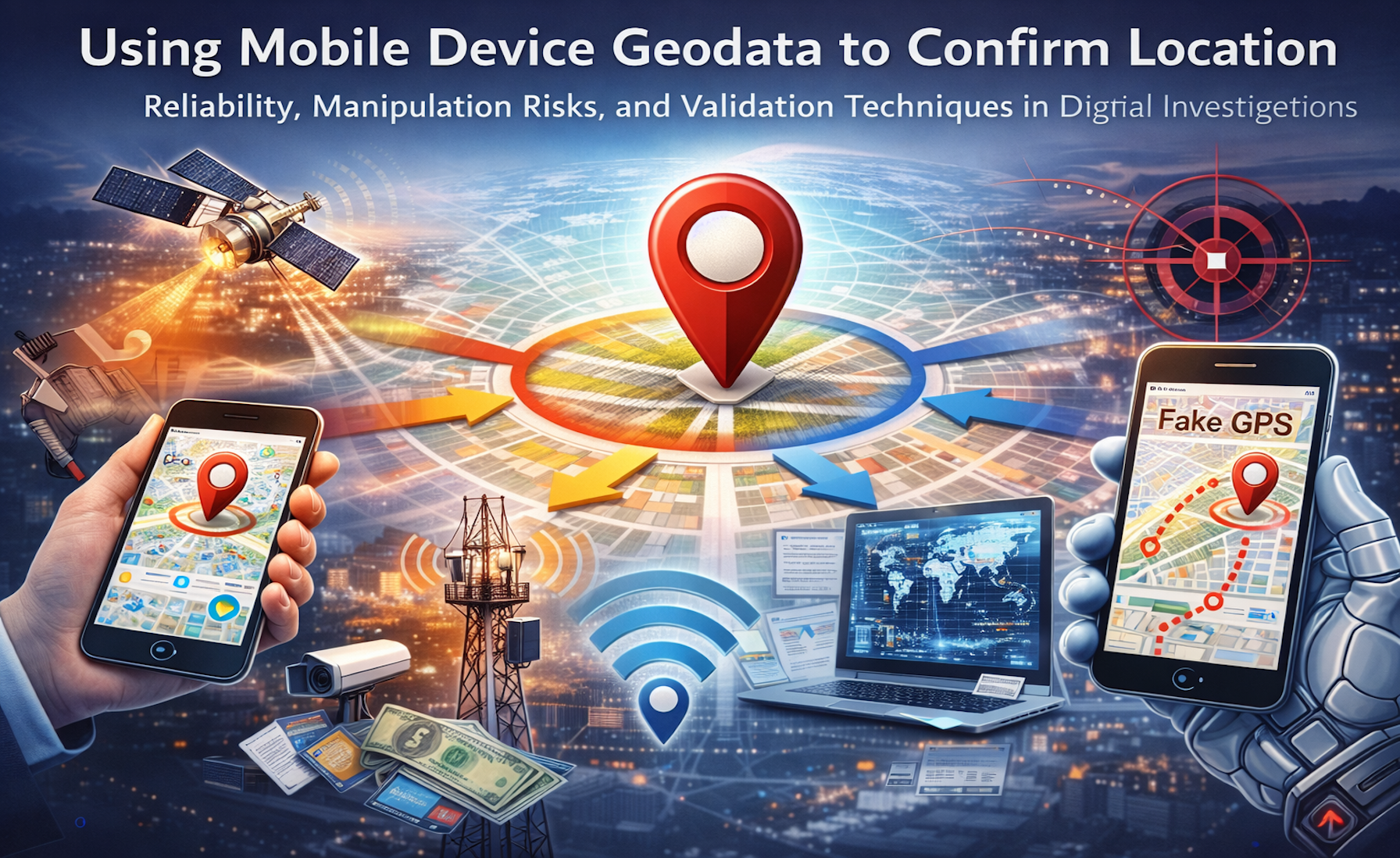
Mobile device geolocation has become a critical evidential source in digital investigations. This briefing examines how smartphones determine location using GNSS, cellular networks, Wi-Fi, and device sensors. It explores the reliability of these technologies, the risks of spoofing and manipulation, and how investigators can validate location data through multi-source correlation and forensic analysis to strengthen evidential confidence.